This is default featured slide 1 title

Go to Blogger edit html and find these sentences.Now replace these sentences with your own descriptions..

This is default featured slide 2 title

Go to Blogger edit html and find these sentences.Now replace these sentences with your own descriptions..

This is default featured slide 3 title

Go to Blogger edit html and find these sentences.Now replace these sentences with your own descriptions..

This is default featured slide 4 title

Go to Blogger edit html and find these sentences.Now replace these sentences with your own descriptions..

This is default featured slide 5 title

Go to Blogger edit html and find these sentences.Now replace these sentences with your own descriptions..

Showing posts with label OTHER TOPICS. Show all posts

Wednesday, 3 August 2016

Most expensive TV

New technological ideas in addition to the outstanding talent of modern elite manufacturers of electrical allow today to watch the most exclusive and at the same time, expensive equipment, which costs hardly afford the best-known tycoons and sheikhs. Not so long ago to buy the most expensive TV super luxury class could only be from the most well-known brands (eg, Vertu).
But more than a dozen years ago, promising a native of Britain Stuart Hughes took a strong position on the market of expensive electronics of the most expensive TVs. This happened after the opening of the Hughes family business — the company Goldstriker International, which specializes in the renewal of home appliances and electronics in a more luxurious model by adding in their design of precious stones and metals.
The most expensive TV — Prestige HD SUPREME Rose Edition
It is from here, and originates the appearance of the most expensive TV, which simply overwhelmed all the elite of our planet. After all, luxury is not an instance of the TV 500 and 600 thousand dollars, as the previous record holder for value. Artwork by Stuart Hughes as the most expensive TV is estimated to date almost 2.27 million.
Production basis for this work served 55-inch PrestizheND — the most expensive TV in the design of the case which was laid vosemnadtsatikaratnogo 28 kg of gold. Framing the body of the most expensive TV decorated with 72 diamonds and hand-finished skeleton of the crocodile skin. As a result, the light conquered all three of these TV — Prestige HD SUPREME Rose Edition, which will surely become one of the attractions of the apartments of their respective owners.

2017 Polaris New Technology

IGX 144” Uncoupled Rear Suspension
     2017 Switchback Assault and Switchback SP models on the AXYS platform are fitted with a new 144” rear suspension called the IGX 144 Skid. This all-new rear suspension greatly improves the on-trail performance of the Switchback Assault. It features front arm geometry very similar to what is used on the 137” AXYS Switchback models with a longer front torque arm and revised, optimized geometry to control pitch. Front torque arm travel has increased by 43% which reduces bottoming. Optimized geometry on the rear torque arm remains uncoupled with tipped-up rails. Polaris calls this the ideal crossover geometry as the combination delivers excellent off-trail capability but with greatly improved on-trail bump performance and confidence
AXYS 144 Underseat Bag (shown above)
     Standard issue on 2017 AXYS 144 models, this new cargo bag features 1,024 cubic inches of storage. Weather-tight design seals out snow to keep contents dry and secure. Bag attaches to the tank and tunnel, made from semi-rigid, compression-molded materials and polyester.
MessageCenter Gauge
     The new MessageCenter Gauge from Polaris is standard issue on all 2017 models, except those that come standard with the PIDD Gauge (except WideTrak or Youth models). It features a larger viewable LCD screen, 4.3” diagonal measurement, with 25% larger display area. A scrolling message center keeps rider informed of operating conditions with an increased number of tell tales by over 60%

Powdertrac Hybrid Running Boards
     2017 Switchback 144” models feature running boards designed specifically for crossover riders. The PowderTrac design allows for maximum snow clean-out & strength with 56% open space. Up front is wider & flatter for comfort when sitting & better positioning when standing. The rear features tapered, dual-angle design for mobility & snow clearance.
Walker Evans Hi/Lo Compression Adjustable Piggyback Shocks 
     The new 2017 Polaris RUSH XCR LE features all-new Walker Evans Racing shock absorbers (front and rear). These shocks feature XCR valving and both hi-speed and low-speed compression damping adjustability making them extremely tunable. Riders can adjust compression valving and ride performance to suit their individual riding styles & the conditions of the day. These shocks are also offered as accessory items for AXYS RUSH & AXYS Switchback models for 2017

Sunday, 31 July 2016

BRAIN-MACHINE DEVICES 2016

Imagine a paralysed person getting up from a wheelchair. Walking, shopping with his family. Imagine him going to see an Arsenal match in the Champions League and have a beer with his mates, once again.
The mind-machine-interface expert Miguel Nicolelis, a professor at Duke University, was one of the first to explore this field. Control “the machine” with your mind.
With $15 million grant from Brazil’s government, Nicolelis, and his team built an exoskeleton propelled by the wearer’s thoughts. The wearer was expected to stand up and hit the opening ball at World Cup 2014.
On paper, the idea is quite straightforward. Collect the brain signals with an EEG cap, translate them and send them to the machine for processing. However, the signals produced – that way, at that time – were not able to control the exoskeleton.
Some say that Nicolelis failed in his task. He, on the opposite, declared that “those 17 months of hard work” were a success. The truth is that rather than seeing a man rising from a wheelchair and walking, the exoskeleton achieved the task of moving one foot forward to hit the ball.
Two years later and we are in 2016. We know much more about the Brain-Machine interfaces. We understand the human brain better to a point where we want to try telepathy. 2016 is the year when the first functional brain-controlled exoskeleton is “for real.”
I’d say that success in “new technology” means that your device, your gadget or your product can solve a problem. However, “the right time” plays a big part in the success of your idea. It might not be now. It might not be tomorrow. But still, you’ll be successful one day, just don’t give up. Good luck.

GOOGLE GLASS 2016

It was back in 2012 when Google introduced the world to “the Glass.” A smart pair of glasses that can show you maps, places and how to get there. The glasses that lets you check your e-mails, take pics and also record videos. It was a wonderful gadget.
Geeks all over the world fell in love with it. It became the “must have” gadget if you were a geek. If you saw yourself as a forward thinker. A futurist. A dreamer.
However, by the end of the year, the expectations that the $1.500 wearable PC would be a consumer hit had been shattered. The reason? It just disturbed people. You would be quite right to say that it was not the “right time” again.
Developers stopped working on apps for Glass, and the consumer launch was postponed. Even Google co-founder Sergey Brin, the Glass visionary, was no longer wearing the device.
However, the glass geeks are still there. Even better, the time is right now. We are in 2016. It is the year of Google Glass. Expect a better, polished version this time. In fact, we expect two versions here at WT VOX.
The industrial version of Glass is going to be a success. There’s no doubt about it. Think niche applications. You’ll see the new Glass in the Army. You’ll see the new Glass in the hospitals. You’ll see it in constructions. Google Glass is back and here to stay this time.

Will the Latest Gadget from Apple Sink or Swim?

The Apple Watch has had a good week, beating almost all pre- and post-launchpredictions. However, now that the so-called “need it now” people have purchased the iWatch, will sales and popularity continue to grow?Will it evolve from being just a neat-looking gadget into a really useful, must-have accessory? This is a question that has even Apple executives worried, despite the company making its first significant foray into the wearable technology industry.

Form or Function?

When is a watch not a watch? when it’s the Apple iWatch. Well, not really. Though the 42mm Stainless Steel Case version with a bright blue leather band certainly looks beautiful, it’s not really useful as yet. At times I’ve simply marveled at how the hardware has been surgically designed and constructed, or how the material used is such premium quality. It’s a device that really tries hard to make that much-needed emotional connection with the wearer, which it does in my case, but that’s where the charm really ends.
The big issue right now with the iWatch (all versions of it) is the bugs. While some may attribute this to early-version software issues, I personally think it’s also lacking in functionality. The Uber app refuses to load, the Twitter app is too confusing, and the app I installed for Starwood hotels just froze my iWatch completely. Plus the iWatch is useless until you’ve invested in the Apple ecosystem, which means that you need to have an iPhone 5 or 6 at the very least.

real need for the iWatch.

Most people point to the fitness monitoring aspect of the iWatch as being a so-called killer function but in my experience, as well as that of other early adopters, it has a very long way to go. Though the fitness capabilities may mature into a juggernaut ina few years, today they just don’t work beyond showing your heart rate and calorie burn.
But there is potential and we’d certainly like to see the apps on the iWatch work independently of the iPhone; after all, what’s the point of having a wearable computer when you have to rely on your cell phone for everything other than checking notifications?
The price for the Apple Watch starts at $350, and goes all the way up to a whopping $17,000. This is a lot for a gadget which at present offers sub-par battery life, a buggy experience and has difficulty working independently of Apple’s ecosystem. However, on the flip side,Apple has managed to bring much-needed visibility to the wearables market, and this will eventually benefit everyone owing to increased consumer traction.
We will soon see Samsung and other manufacturers introducing their versions of wearable computers. But for now the current first-generation iWatch is a sure sinker. It’s best suited for someone who has a few hundred dollars extra which they don’t mind using to explore the new iWatch’s beauty and marvel at its engineering.

Lantronix Zano Quadcopter

While small ‘copters and quadcopters are nothing new, what really makes the Lantronix Zano stand out is its tiny size and the fact that it can be controlled by an app. The quadcopter uses sensors which allow it to hover and avoid obstacles. Though a price has not been mentioned, its safe to say its going to be over $500. An expensive toy for techies.

Stunning Gadgets Solar Battery Charger

Not your ordinary solar battery charger, is the first impression we got. Stunning Gadgets sells new technology which is designed to be rugged, which is why they have no problem backing their products up with a lifetime guarantee. The Solar Battery Charger sports a built-in 5000mAh Battey, two charging ports and highly efficient solar cells. The tough design makes it an excellent companion for hiking and camping trips, and it can prove to be invaluable when the national grid goes down. A must-have in today’s gadget-centric universe.

This Drone Wants to Replace Your Selfie Stick

Taking selfies using a selfie stick is so 2015. One company at this year’s CES has a whole new approach to the problem: A drone. Called Lily, the gadget walked away with one of show’s Best of Innovations awards in Unmanned Systems and Accessories for its “throw-and-shoot,” a technology designed to catch video of you without the need for any controls.
The way Lily works is simple: just throw the drone in the air and start moving. Lily has 20 minutes of flight time and will follow you down the slopes, out on the water on your jet ski or even on a run around the block. The possibilities are endless. While it is up in the air, documenting your every move, the device can capture 12-megapixel stills as well as 1080p video at 60 frames per second (fps), or fast-motion video at 720p and 120fps. And it will make sure you never leave the shot, something even the most skilled cameraman will have trouble with when it comes to sports videography.
The drone is able to track you thanks to a small receiver you need to keep in a pocket or attach to you in some way. Audio is also recorded using that receiver that can later be synced with your video.
Several pre-programmed flight paths allow you to dictate exactly how you want the drone to follow you. For instance, you might set it to catch video of you from the front, or decide you’d rather have it trailing behind or beside you. Lily can hover in place over a stationary activity, or follow you at a speed of up to 25 mph. It can hover at a maximum of 50 feet above you and a minimum of five feet above your head, ensuring it stays close while not so close it might hit you. Lily is also waterproof, so you don’t have to worry about it getting too close to the lake or getting damaged in a light rainstorm.
After you’re done flying, simply summon Lily back to you using the tracking device, and the drone will land in your hand, ready to head out on your next adventure.
The 2.8-pound device is the brainchild of co-founders Henry Bradlow and Antoine Baresque. The two met while studying at UC Berkeley and working in the UC Berkeley Robotics Laboratory. The company was founded in 2013, and has raised $16 million from High Line Venture Partners, SV Angel and Upside Partnership, among others.
Lily is expected to ship next month, and is currently available for preorder for $799. The price will eventually rise to $999

Samsung Family Hub Refrigerator

Our kitchens are getting smarter by the year. This year Samsung introduced its new Family Hub Refrigerator designed to do a whole lot more than just store your food. On the outside of the fridge is a 21.5-inch Android tablet that can display your family’s calendar as well as things like notes and photos. A camera inside the fridge snaps a picture each time you close it, recording what’s inside so you can check in from anywhere and see if you’re out of something. (So, when you do use that last bit of salad dressing, you can also order groceries right from the refrigerator door and have them delivered to your home.) Other features include music streaming through its built-in speakers and the ability to watch TV through screen mirroring with a Samsung Smart TV. Pricing and release date info for the fridge has yet to be announced.

Fitbit Blaze

Smartwatches are all the rage these days, and Fitbit is getting in on the game with its new Fitbit Blaze. Like other wearables, the $199 Blaze can track your movement, heart rate and sleep. Even better, it can figure out what activities you’re participating in on its own, with no need to enter an “exercise” mode when you hop on the elliptical. Also built into the wearable is the ability to get notifications for things like text messages, calendar entries and phone calls from your smartphone.

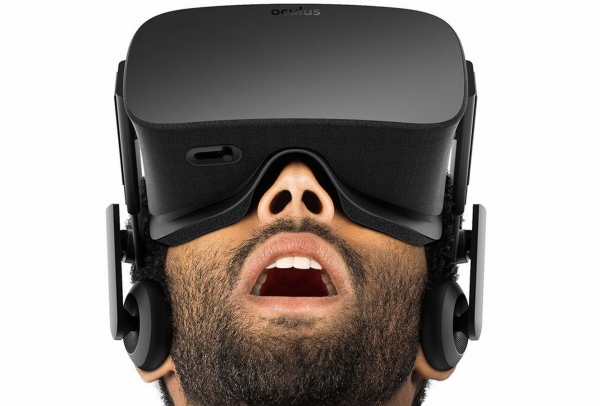
Oculus Rift

The consumer version of Oculus Rift is finally headed our way. Facebook used CES as an opportunity to announce consumer availability and pricing for the VR headset. Unlike some other virtual reality devices on the market that use smartphones for the display, Rift has its own built-in display designed specifically for VR. The Facebook-owned device has a high refresh rate, allowing users to become fully immersed in the virtual world.  Available now for $599, the headset ships with a sensor for motion tracing as well as an Xbox One controller.

EHang 184

Forget flying a drone. What if you could be flown by a drone? EHang’s 184 drone is a quadcopter with one unique feature: it can carry a person. Once someone climbs inside she just tells the drone where to go, and it navigates her there with no need for any pilot skills. The drone can fly at a maximum altitude of 11,000 feet, has a top speed of 60 mph and has 23 minutes airtime.  It’s not going to be a replacement for an airplane, but it could ultimately be something you use to make that morning commute a little easier, that is if the FAA approves use of the gadget. No release date is available but when it does hit the market, the estimated starting price will be $300,000.